FOUNDER’S DESK | 002
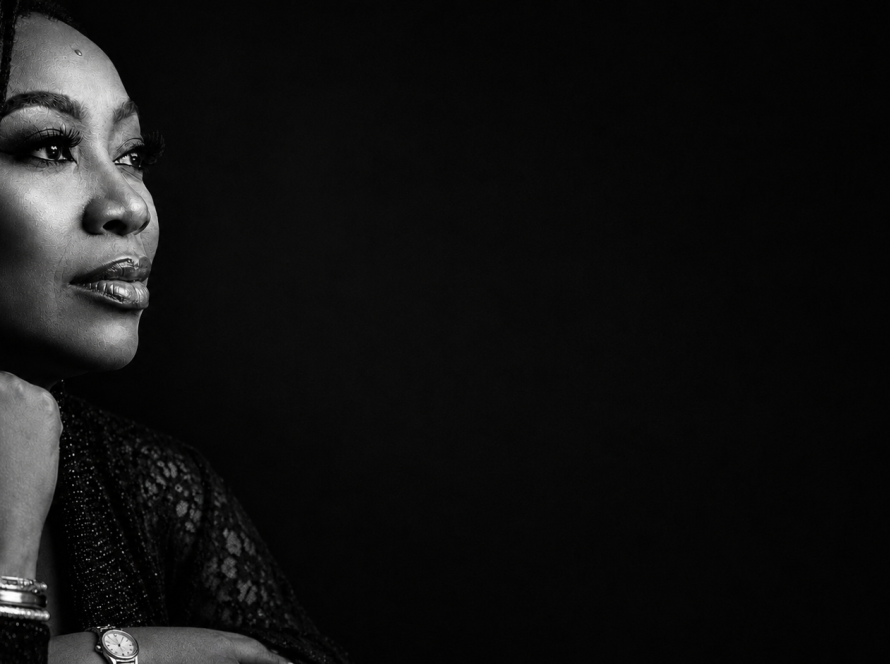
By Deola Abela Inyang
Founder & CEO, Abela® World Limited & Abela Centre for Olfactory Arts, Pioneer, Afro-Baroque Perfumery®
Reading Time: 9–10 minutes
Categories: Founder’s Desk • Identity • Culture • Afro-Baroque Perfumery®
It began, as many things do, with something borrowed.
When I first fell in love with fragrance, I fell in love with the world that was already there waiting for me. Vanilla. Cream. Lavender. The warm, yielding sweetness of pumpkin soufflé. The gourmand fragrances of autumn in the Western imagination, rich, and enveloping and beautifully made. I was drawn to them the way anyone is drawn to beauty when they first encounter it, completely and without question. I did not yet know that I was learning someone else’s mother tongue.
In the early years of building Abela® World, I worked with fragrances, that were ready-made, handed to me as finished emotional statements. They were good fragrances. Often lovely. But each time I worked with them, something resisted. Not in my mind. In my body. There was an emotional diversity I was reaching for that these fragrances could not hold. A feeling I wanted to express that kept slipping past the edges of what was available to me. I did not have the language for it yet. I only had the awareness of its absence. The way you are aware of a word sitting just beyond the tip of your tongue.
So I began to look for it the only way I knew how. I started collecting raw materials from varying origins and sitting with them, one by one. I experienced each one not for its technical properties but for what I can only describe as its soul language. The emotional vibration it carried. Whether it produced in me a sense of recognition.
I was not building formulas yet. I was listening.
I was asking each material whether it knew something about me that I had not yet said aloud. It was in this listening that I began to understand what had been missing.
It was not a note. It was not a material. It was authorship.
The African nose has been a market.
It has rarely been a muse, and it has almost never been an author in the true sense of identity.
The global fragrance industry is built on a vocabulary that was written, almost entirely, in the West. This is not an accusation. It is a fact of history; of who controlled the means of production and the platforms of narration for long enough to make their preferences the default. And within that vocabulary, certain emotional categories became codified in ways that felt universal but were never truly so.
Take the gourmand. In fragrance terminology, “gourmand” refers to a scent family built around edible, dessert-like, or culinary notes. The word comes from the French term for someone who enjoys rich food and drink. As a fragrance classification, the gourmand exists to evoke warmth, comfort, indulgence. The pleasure of something sweet and nourishing.
The same emotional category, expressed through an entirely different cultural vocabulary, reveals the central problem: the classification system was built around one set of lived experiences and then presented to the world as neutral. In the Western European imagination this translates to vanilla, to caramel, to the buttery warmth of a patisserie on a cold afternoon, to praline, to the inside of a bakery at Christmas. These are real, and genuine emotional references. They belong to real people and real memories. I do not dispute their validity.
But they are not my memories.
My gourmand is the steam that rises from a pot of goat meat pepper soup.
It is the heat of ‘uziza’ leaf opening in hot broth. The deep mineral warmth of crayfish. It is the smoky, communal joy of jollof rice cooked over an open flame, the particular sweetness of the crust that forms at the bottom of the pot, the one everyone reaches for first. It is the soft, floury warmth of fufu, the way it holds heat long after everything else on the table has cooled. It is not sweet in the European sense. It is warm in a different register entirely. Complex and layered and alive with a depth that does not announce itself but settles into you and stays.
And then there is the smell of Nigerian coffee. Not the sharp, roasted brightness that defines the Western coffee experience, but something gentler, creamier, with a vanillic warmth underneath it that feels less like a morning ritual and more like a quiet inheritance. There is cacao from Western Nigeria, grown in the rich forest belt that stretches across Ondo and Osun and beyond, with a depth and a darkness that the world has tasted in its finest chocolates without ever being told where it came from.
There is shea butter, harvested in Nigeria, Ghana, and across the savannah belt from Guinea to Sudan, warm and nutty, faintly sweet; one of the most quietly present smells of African domestic life, spread on skin, worked into hair, passed between generations without ceremony because it has always simply been there.
These materials have travelled the world. They have entered laboratories and blending rooms across France, England, Switzerland and the United States. They have become the backbone of some of the most celebrated fragrances ever made. But they have always travelled as raw material, never as narrative. Never as authorship.
Africa has not lacked for aromatic heritage. The continent has supplied the global fragrance industry with some of its most prized and irreplaceable materials for centuries. This is not a recent phenomenon. The aromatic trade routes that carried African materials into Egyptian, Arabian, and Roman perfumery predate the modern fragrance industry by several millennia. Frankincense from the dry highlands of Somalia and Ethiopia. Myrrh from the Horn of Africa, carried along ancient trade routes to the perfumeries of Egypt, Arabia, and Rome. Vetiver from the grasslands of Southern Nigeria. Ylang ylang from the coastal forests of the Comoros. The florals, the resins, the woods that form the quiet foundation of fragrances worn daily by millions of people who have never once been told where these materials began their journey. These ingredients crossed oceans. The voices of the people who grew them, harvested them, and understood their deepest cultural meanings did not travel with them.
But the authorship gap is not only about materials and their origins. It is about the entire olfactory world that has never been named. The smells that define African life and have no equivalent in the Western fragrance canon because no one with the tools to build that canon ever thought to look for them. Not until now!
The Harmattan. That dry, dusty wind that descends on West Africa between November and March, carrying with it a particular quality of air that every Nigerian knows in their body before they know it in their mind. Cool and parched and faintly mineral, with the smell of harmattan dust settling on surfaces, on skin, on the leaves of trees that have gone quiet waiting for rain, or the morning remedy that it leaves in its wake.
There is no Western fragrance equivalent for this. It has never needed one. It belongs entirely to us.
The smell of rain on Nigerian soil. Not the clean petrichor of a temperate country receiving moisture after a dry spell, but the particular ozonic intensity of a tropical downpour breaking over river basins and rainforest, the way the earth rises to meet it, the way the air shifts in the minutes before it arrives over Lagos, over Ibadan, over the forest towns of the Southwest. And then the atmospheric difference between those places themselves. The dense, humid, salt-edged air of Lagos pushing against the ocean. The softer, greener quality of air in Ibadan, the oldest large city in West Africa, where the hills hold the moisture differently, and the outskirts still carry the smell of farmland at their edges.
The coolness of clay. The particular smell of a mud hut in the hinterland, where the walls hold the night’s coolness deep into the afternoon, and the earth underfoot has a mineral richness that no synthetic material has ever fully captured. This is not poverty. This is architecture in conversation with the land it stands on.
It has a smell that is ancient; precise and entirely its own.
All of this has been missing from our olfactive language. Not because it does not exist. Because no one had yet built the framework to hold it.
This is the gap Abela® World is filling through its work at the
Abela Centre for Olfactory Art® in Lagos
The African fragrance market, valued at several billion dollars and growing at a rate that outpaces most mature Western markets, represents one of the most significant and most overlooked audiences in the history of fine fragrance. Its people have worn perfumes from the great houses, visited iconic perfume regions, purchased the osmographic works of master blenders from Paris to New York to Dubai. And yet within all of that consumption, almost nothing looked back at Africa and said: your comfort smells like this, your memory smells like this, your identity has a scent and it belongs to you.
What Afro-Baroque Perfumery® represents, in formal terms, is a decolonial creative framework: one that does not seek inclusion within an existing canon but establishes a parallel and sovereign olfactory language rooted in African cultural experience.
This is what Abela® World has been building. Not an argument. A framework. One that places African cultural reference as the protagonist in every olfactory story we create. Not as an exotic addition to a Western structure, but as the originating voice, the cultural centre from which every creative decision radiates outward.
We have taken the smell of Nigerian Harmattan and given it a home in fine fragrance. We have taken the savoury memory of goatmeat peppersoup and made it wearable.
We have taken the warmth of shea butter and Nigerian cacao and the deep comfort of a shared pot of jollof and asked what it would mean to build a fragrance around these references the way a French perfumer builds around the memory of a garden in Grasse.
We created this language because it did not yet exist. And in creating it, we have begun to build what African olfactory identity has always deserved: a creative framework that embodies its true essence, that incites remembrance from within, that causes the person who wears it to pause not because they have encountered something beautiful but because they have encountered something they recognise.
That recognition is the work.
That recognition is Afro-Baroque Perfumery®.
The language exists. We are writing it now.
Deola Abela Inyang is the Founder and CEO of Abela® World Limited, a Lagos-based fragrance and olfactory arts company, and the Pioneer of Afro-Baroque Perfumery®. She is the Founder of the Abela Centre for Olfactory Art®, the first olfactory art institution in Africa.
WANT TO CREATE A SIGNATURE AFRO-BAROQUE SCENT?
GET IN TOUCH WITH ABELA